Monday, May 25, 2026

Poppies, peonies, and Norma’s picnic: the way we kept Memorial Day


Memorial Day is quieter now.


This year Memorial Day brought many gifts. My cousin carried the tradition of placing flowers on our ancestors’ graves. This year she and a dear friend also carried a tribute to my son‘s grave. Since I have never been there, I deeply appreciate those who tended in my place.


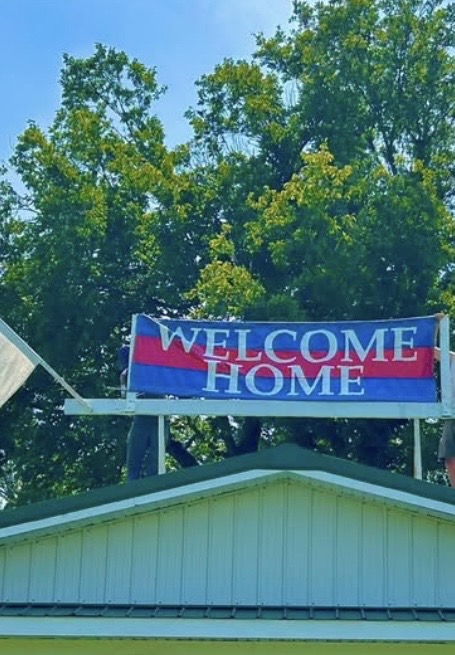
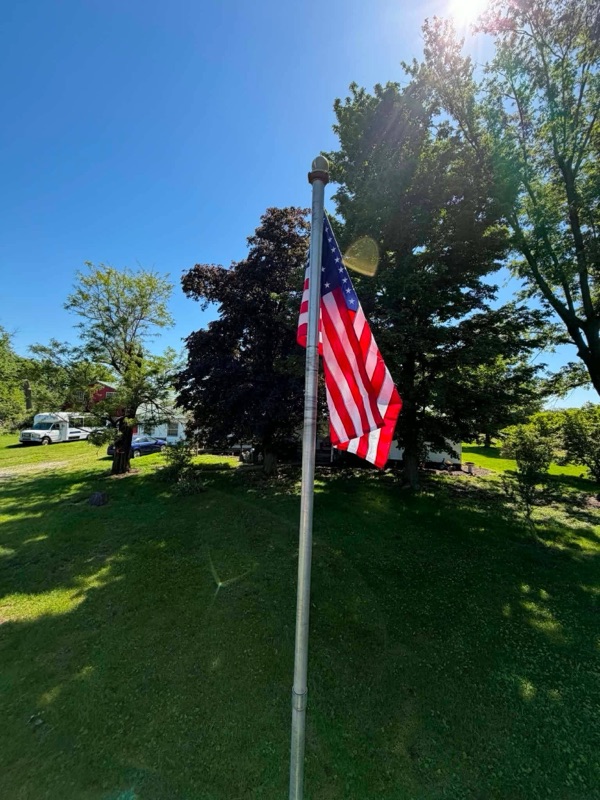
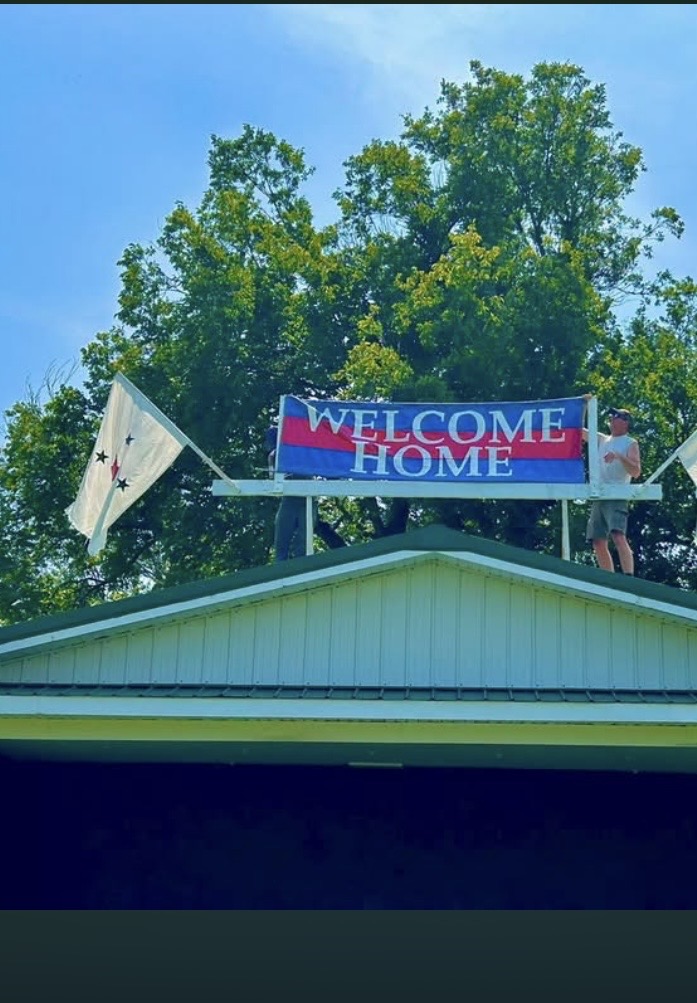
Sweet phone calls marked a holiday when people know my day may be quieter than it used to be. My young neighbors who bought my farm brought me a Memorial Day flag, hung it up for me, and took a picture. They’ve been so good to me, and that flag felt more than decoration. It felt like someone helping me keep the spirit alive.


When I was growing up, Memorial Day had a routine. It had a purpose. It had flowers in the trunk and food waiting at the end of it. It was not just a long weekend. It was a family rite. We kept it the way people keep things when they have been taught without many words that remembering is part of being.


One part of Memorial Day  celebration began a few days before the holiday. My grandmother got attached to the idea of purchasing American Legion tissue paper poppies. Through the years, the flowers got a little smaller and a little more papery, as things do. But the ones grandma saved in the top drawer of her dresser were just beautiful. Grandma had a good many of these little flowers, and sometimes she put them in a little juice cup. Now our juice cups were jelly jars shaped so nicely that they became glasses after the jelly was gone. Some even had designs printed on the side as if they knew all along that they were designed for orange juice and poppies.


One year I had what I considered a brilliant idea. Grandma had a hat pin holder, one of those beautiful things with holes in it, and I begged her to let me take the hat pins out and put the poppies in it. I do not remember what we did with all the hat pins that year, but I do remember one beautiful one. It was black and round, almost like a blackberry made of china or something like it. We left that one in the middle, and I arranged the poppies all around it. To me, it looked like a poppy made out of poppy. 


I was so tickled with myself I might as well have been to the moon. Gramma, being Gramma, said it was pretty—-one time. Now I wanted to hear it 57 times, but I got once, and that was supposed to be good enough to last. Like most kids my age I was not smothered with phrase as a child. I was smothered with love and food, worry and care, responsibility and expectations of good. Those are not small things. However, praise was not flung around like confetti. If someone said something was pretty, you had reason to remember it.

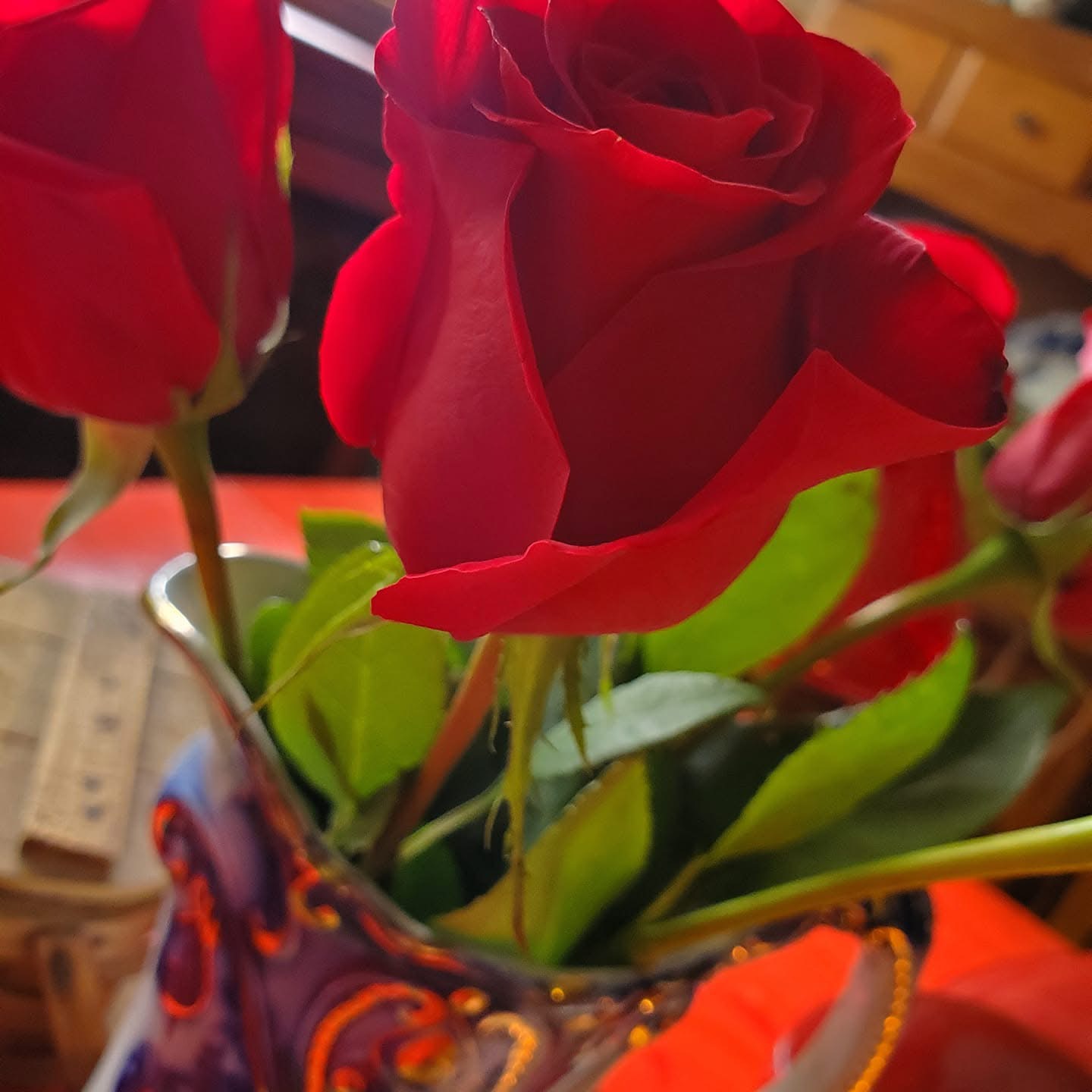
The other flowers of Memorial Day were not paper. They were real peonies. We took these flowers to the cemetery, and we did not just toss them in the car and hope for the best. We soaked them well, then wrapped the stems in wet paper towels, and tucked them into tinfoil so they might stay pretty just a little bit longer. Then we put them in a great big aluminum dish pan and carried them in the trunk carefully to the cemeteries. The main cemetery we visited was Mount Salem Baptist Cemetery, right across the meadow from where I live now.

At Memorial Day that cemetery was beautiful. It had white crosses at the veterans' graves, and flags were flying proudly. My uncle, Paula‘s daddy, used to paint those crosses every year, and they looked proud. He was a veteran himself, a hard worker, and a great, great person. I loved him dearly. I know his wife helped him, and probably Paula did, too. In my mind he was always there with those crosses and flags, doing that work because someone ought to do it, and he was somebody who would.


One sentinel of that cemetery was a hard-working woman named Martha Helen.She mowed that cemetery for what seemed like 100 years. She was around my mother’s age, and at my mother‘s funeral (my mother passed away at 94)  Martha Helen stood there in her work clothes because she had helped with the hand-digging part of that grave. She was a school teacher, and everybody said she was pretty strict. I worked with her as a teacher, and when she retired, I helped plan her retirement. She was a force, and thank goodness for forces like that.

When I was little, I helped my grandparents and my mom put flowers on graves of family, friends, and good old people who had no one to help do this honor. But… I also had graves I simply loved, and I always took at least one bouquet apart and put individual flowers on tombstones that caught my eye or touched my heart. There was one headstone that looked like a tree carved out of stone, and I thought it was beautiful, so I just put a flower there. Then there was an enormous gray, granite stone with the last name Stokes, and either on the stone or near it was a marker for a boy who had died in a coal mining explosion. I believe my grandfather‘s grandfather, William Riley Brown, died in that same explosion. His own stone was modest compared with this grand one. That big granite stone’s inscription got me every time. It told how many had been killed and what had happened in the explosion, but the last line was the one I carried away with me: “Many hopes and dreams lie buried here.” I understand that line better now than I did then. Maybe I understood it even as a child. Kids understand more than we think. They might not have the vocabulary for sorrow, but they know when something is too big to step over.

There was one grave I put  flowers on because my grandfather asked me to. He took me to a little diamond-shaped stone when I was very small, back when he could still walk to the cemetery with his arthritis. He knelt down by the grave, and then he said, “I want you to always put flowers on this grave because I killed this man.” That sentence would stop any child cold. 

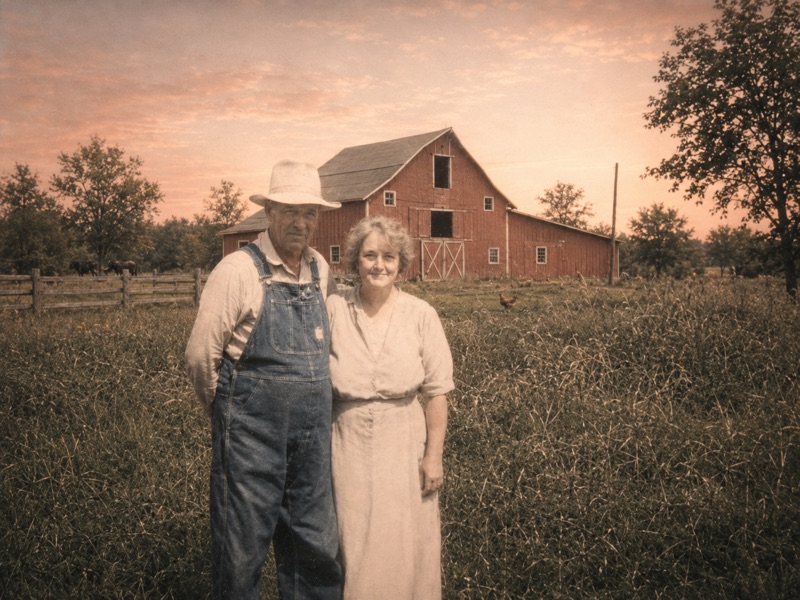
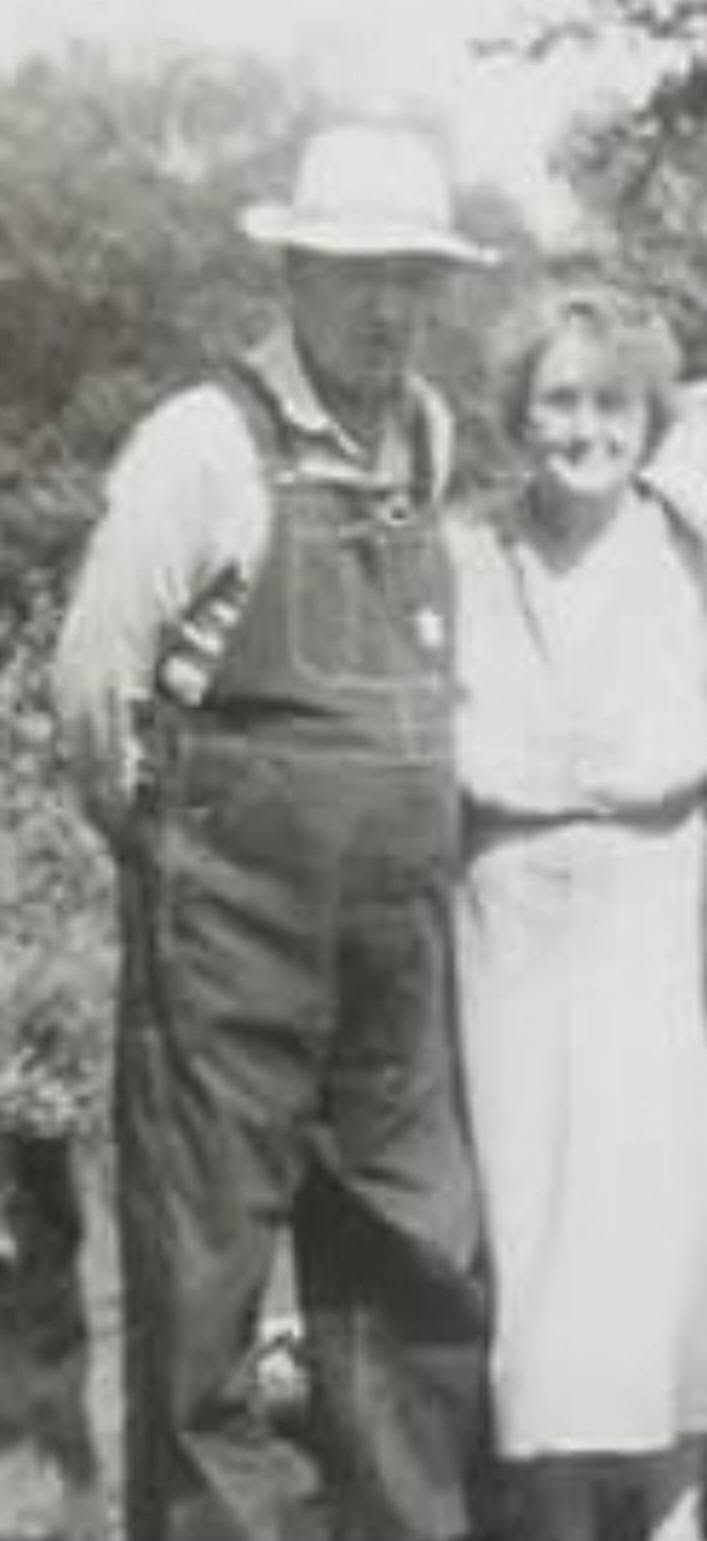
My grandfather was the epitome of a gentleman to me. He was a little, old farmer in faded overalls and long-sleeved, chambray shirts. He had a good watch and an everyday watch, both the kind that should be on chains. One of them was attached to a pretty silver chain, but one was attached with a brown shoelace. I thought those watches were heavenly. I sometimes pretended that I was taking my watch out of my pocket, but I really didn’t have anything there. Paw-paw taught me to spit, although I did not get any tobacco like he did. After he got older and sick, Gramma would not let him chew anymore Beechnut tobacco. Paw-paw, however, got the better hand because he hid that tobacco from her in his planter box in the barn. He told me solemnly not to tell, so I did not. Grandma did not ask, so that worked out well.

After my grandfather passed away, my dad decided to sell that planter. When the tobacco was found, Gramma burst into tears and said, “Oh, Manuel.” His name was Emanuel, but she always called him Manuel. That hidden tobacco was such a small thing but still a big thing at the same time– – one forbidden comfort, tucked away by a man who wanted something that still felt like his.


The man my grandfather said that he killed was named Frank Leslie. My grandfather had not murdered him, not in the way we usually use that word. However, when my grandpa was a little boy, he and some other boys had the measles. Frank Leslie was an old, old man, and he had never had the measles. Paw-paw said that Frank cried and begged, and those little boys being cruel in the careless way children can be cruel when they do not yet understand consequences, crawled all over him and thought it was funny. Then the old man got the measles, and he died. Isn’t that terrible? My grandfather carried that all his life. So, I put flowers on Frank Leslie‘s grave until I could not walk anymore. Although it was not my guilt, it had been handed to me as a remembrance. I did not mind carrying that for my grandpa.

There is another story in that cemetery, one connected to one of the darkest books and movies people talk about. I will not make too much of that here, but I will say that as long as I could do so, I put flowers on a sister‘s grave. The man was later executed, and his grandmother was a friend of my grandma’s. She asked me to always keep flowers on her granddaughter‘s grave. So I was not thinking about notoriety. I was thinking about a girl, a grave, and that flower in my hand. That is how children think in cemeteries. Or maybe it is how I was only. I read cemeteries like books. I loved to look at tombstones and imagine the stories behind them. I also noticed who was beside whom, and who seemed alone.

My great-grandmother Savannah was buried by herself right next to my great-grandfather Herrington, who had remarried and was buried with his second wife under a fancier stone. Now that second wife did live the longest of all, so my mom always said it was her decision. I always thought that was pitiful. Poor Savannah. She was a mother of his children, and yet there she was–close but not quite included. 

On my dad‘s side, there was another two-grave kind of story. We usually went to another cemetery, Friendship Baptist Church, and there we tended to graves of his grandmother and grandfather, and older family, including my great-great-grandmother Amytis Ann Tedford. I always loved her name. Years later, toward the end of my dad‘s life, we organized a reunion, and there I met Ellen. She was a cousin connected through that family. We met initially in the cemetery. Later we had supper together, and one Autumn she drove up from Kansas City, where she was staying on a visit from Washington state, her home. She came to see my mom and me. Ellen and I have kept in contact all these years although I do not write or call as faithfully as I should. She is a joy, and I treasure that I got to know her.

I wanted to ask her a question I almost did not want to ask. Amytis Ann had married a man who already had children from his first wife, and then she had children of her own. Ellen is related through those first children. I thought I wanted to know whether Amytis had been good to them. I wanted the answer, but only if it was good news. Now that is a dangerous kind of wanting. I asked her if she had any idea whether our grandmother – ancestor had been a good stepmother. Ellen smiled and said she had always heard good things, that Amytis Ann loved those children, loved them like they were hers. I cannot explain how glad that made me. I later told my cousin Sherry about this conversation, and she smiled. I’m pretty sure she trusted any relative of our grandmother’s without asking such a silly question.

After the cemetery visits, there was food. Sometimes Gramma, Mom, and I, and later my son had a car-picnic packed by my mom and grandma and eaten on the road between one cemetery and another. I sometimes saw families who spread big baskets of food out in the cemetery yard on quilts. That looked pretty, but we did not do that. Our picnic came later. When we got home, Memorial day turned into something my mother called Nancy’s picnic.

The name came from television, from the soap opera As the World Turns. Nancy Hughes’ character used to have these family picnics. Macon, Missouri, was the birthplace of the actor playing Dr. David Stewart. Betsy Stewart was the starting place for a very young, very beautiful Meg Ryan. So while we prepared the food, my mother would laugh and say she was making Nancy’s picnic by Norma.

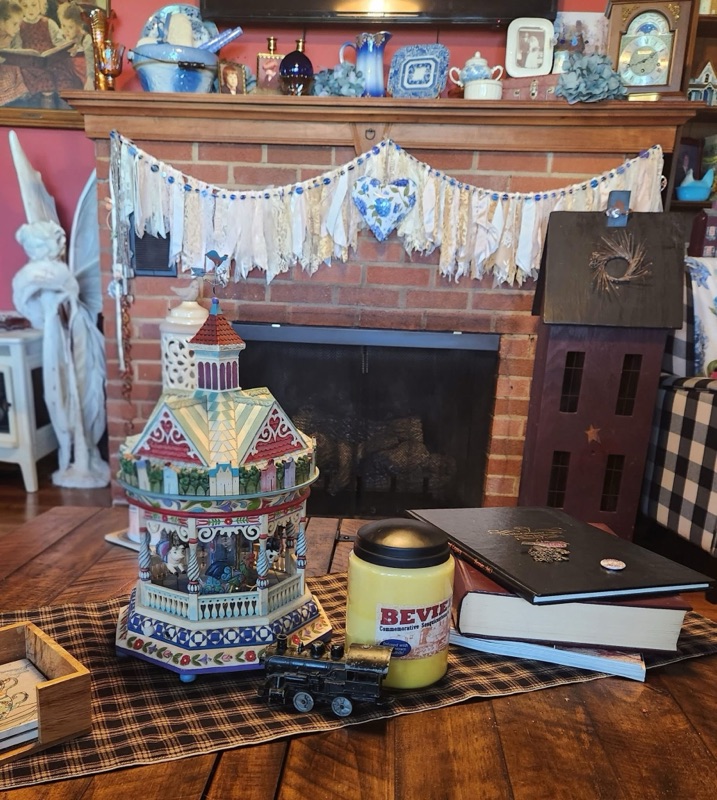
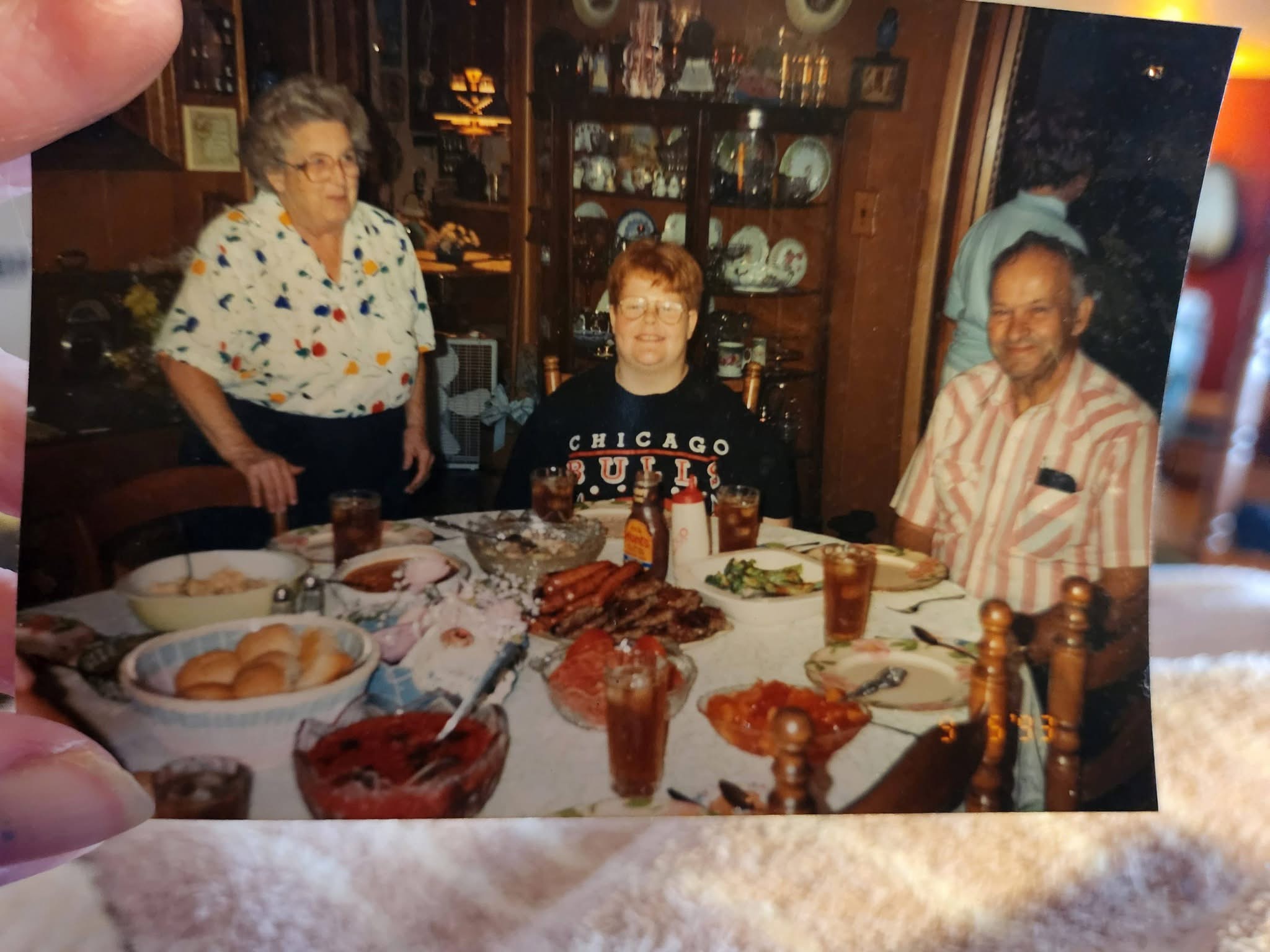
Daddy grilled hotdogs and burgers. Grandma made her potato salad with homemade mayonnaise, (to die for.) Mom’s legendary baked beans made the menu, and later my dad made homemade, vanilla ice cream outside in the blue, hand-crank freezer that still sits by my fireplace. Then the ice cream was packed in woven rag rugs that coincidentally were woven by Martha Helen‘s mother. 


The cemetery had been mornings of wet peonies, tinfoil, flags, white crosses, the metal dishpan, the graves of the known and the almost forgotten. The afternoon was smoked from the grill, maybe  a round of croquet, potato salad, family, and ice cream coming together slowly with salt and ice.

That was Memorial Day. It was not perfect. No family is. There were stories under the stories, and some of them were sad or strange or unfair. They were remarriages and lonely graves. There were children lost and old guilt carried. There were cemetery fights and people who had to stand guard so money meant for the dead was not swallowed by the living. But there was also care. And it was definitely care that took our feet down to the graves by the edge of the cemetery where our great-grandparents on my granddad’s side were buried ….because there was usually a big snake.

Care painted white crosses. Care put flags on the ground. Care soaked peonies and wrapped their stems, and care saved paper poppies in a drawer, and it asked a little girl to remember Frank Leslie. Care fed everybody when the cemetery work was done.

Memorial Day is definitely quieter. It is not as wonderful.  The dear people who packed the picnic and cranked the freezer and knew where every grave was? They are gone. I cannot walk the cemeteries like I once did. I rely on others to put flowers where I wish I could put them myself. The blue ice cream freezer sits by the fireplace quiet, not cranking, but not gone either.

I think that’s what memory does. It stops doing the old work and starts doing a quieter kind. Poppies aren’t in Gramma‘s drawer now. Peonies are not in a metal dishpan in the trunk. Nancy’s picnic is not waiting in the back yard. But I can still see some of it, smell the barbecue, and taste the cold sweetness with homemade ice cream. I can still see my grandfather kneeling by a small stone. I can still hear grandma saying my creation was pretty— just one time, which was enough, and yet was not enough.

And I can still say we kept Memorial Day, and we still keep it. We keep it with flowers and food, duty and worry, beauty and love. We keep it the best way we know how.


Wednesday, May 20, 2026

BUCK NIGHT UNDER THE STARS


​I don’t know exactly when the drive-in opened for the season. In my memory it feels like Memorial Day to Labor Day, but that may be the swimming pool talking. Memory blurs the edges sometimes. Pools and drive-ins both belong to warm weather, late daylight, summer skin, and children who thought the world was supposed to smell faintly of cut grass, popcorn, and coconut oil.


Two drive-ins exist in my world: one lived in Macon, and one lived in Moberly. Moberly was more my mother‘s town. She had taught school there, so it had a little different claim on her. We went to the Moberly drive-in often, but I think the Macon drive-in had its place in my heart. Between the two of them, I know I learned as much about life, movies, weather, families, and human behavior as I learned anywhere else.


When I was little, the drive-in still had those wonderful speakers that we pulled off the pole and hung in our car window. To me as a child, those looked like magic lunchboxes that talked. My dad rolled the window down just enough, hooked the speaker over the glass, and hoped it worked.


Sometimes it didn’t.

If a person got to the drive-in early and the speaker was dead, there was a little moral dilemma involved. We could put it back and move the car to another space. Or, if nobody had pulled in beside us yet, we could try the other side and take the good speaker.

Of course, then the people who came later discovered their speaker didn’t work, and they were not very thrilled with us. My own feeling, looking back, is that maybe they should’ve gotten there earlier. However my mother would never have seen it that way. My mother was a purist about doing the right thing. She would have Daddy move the whole car to another spot before she would steal a good speaker from an imaginary neighbor who had not even arrived yet.


That was my mother.

As the years went on, the speakers disappeared, and the sound came through the radio. We tuned our car to a certain station, and somehow the movie came through the airwaves. I understand this was probably not technically more magical than a speaker hanging on a wire through a window, but it certainly felt more mysterious to me. I could not understand a movie floating through the air on a dark night and landing in our dashboard, but I could understand a cord and a box.


The drive-in was not just a place to watch a movie. That was almost the least of it. There was a playground way down front in Moberly and behind the concession in Macon. Macon’s had one of those merry-go-round contraptions, not the pretty carousel kind with painted horses, but the exciting metal kind where somebody ran around pushing until everyone on it was either delighted, half sick, or terrified. I was fine if my dad was spinning. Of course, I trusted him to the moon and back. If another took control, I was petrified. I knew, even then, other people were not reliable stewards of centrifugal force. My parents usually stayed in the car. My mother, I think, was just a little nervous about the general world outside the car. I was allowed to go play if my dad watched me. That made all the difference. The whole world could change depending on whose eyes were on me.


Later, when I had my own family, the drive-in became blankets spread out in front of the car. That was my favorite way to see a movie. Under the sky. Shoes kicked off. Children wandering back-and-forth to the concession stand. Grown-ups talking too loudly. The giant screen lighting up the Missouri night. One night, some people near us were loud enough that I probably shot my mouth off a little too loud loudly, and one of the men from the other cars came strutting over to our blanket, probably with a little help from alcohol and a lot of help from male foolishness. He asked if we were gonna make him be quiet. The people on my blanket got very quiet. My husband was a strong man. He just stood up and said quietly, “I think we could, but I don’t think we should.”


And that was that. The man went right back where he came from. I have always loved that line. It was not bluster. It was not showing off. It was not a threat exactly. It was simply a statement of available options and good judgment. We could. We shouldn’t. Let’s all choose civilization and finish the movie.


There was buck night. I never got the full value of buck night as an only child, but large families understood its glory. On buck night, a whole carload got in for a dollar. However many people one family could jam into a car counted as one car. I think pickups of people may have gotten in for a dollar, although memory may be exaggerating there. I do remember going with a group of girls in the back of a pickup for somebody’s bunking party, and I’m pretty sure we all got in for a dollar.


For big families buck night was practically a civic blessing. My husband‘s family was large, and I remember going to see Ghostbusters with them that way. We may have filled more than one car. We may even have had to spring for two bucks. My son‘s grandmother was from Germany. She had a delicious accent and a wonderful laugh. At the drive-in, there were metal lawn chairs up near the concession stand, two or three rows of them, where people could sit outside their cars and watch the movie with the sound turned up loud. I always thought I might like to sit there, but I could never quite give up the blanket or the dark car. That night, though, she sat up there, and I could hear her laughing. Ghostbusters was hysterical the first time I saw it. It really was. And hearing her laughter, that shrieking, delighted laugh with her German accent wrapped around it, was half the joy of the movie. Some memories are pictures. Some smells. That one is a sound. Her laughter rising above the cars on a summer’s night.


Another good drive-in night was The Blue Lagoon with Brooke Shields and Christopher Atkins. I took my cousin from Indiana, and it rained. We met friends there, and some of them were single, so of course there was that teenage scanning of the crowd. While we were sitting outside, my cousin picked out a boy she thought was cute. They talked a little, flirted a little, nothing that ever became anything. She lived too far away, and her tastes were a little uppity. In a good way, maybe. Later she got into the car with me and watched him walking away. Her eyes got big, and for one moment her beautiful speech slipped into something a little more Indiana-Midwest. She said, “Why come couldn’t we have been born pretty instead of so smart?”


I remember laughing. Not just smiling, laughing a quiet laugh until it finally boiled out of me. At the time, I thought I was probably just about as pretty as I was smart, which is to say I had very little real understanding of either one. It took me years to understand intelligence as anything separate from doing well in school. A good test score never made me feel better than anyone else. I knew I could read. I knew I could write. I knew I could do certain scholastic things. But life smart? Street smart? Smart about choices and people and futures? That was sure a different matter.


I still don’t know that I have ever felt smart in that way. The mistakes and bumbles and wrong turns of life have a way of taking the shine off any pride I might have had. A person can be literate and educated, but she still does not know how to save herself from sorrow. She can know the difference between ITS and IT‘s and still not know which doors will lead to heartache. I do remember my cousin‘s face – young and earnest and funny without meaning to be funny, asking why we couldn’t have been born pretty instead of smart. And I do remember Brooke Shields on that huge screen. I remember light rain on the blanket. I remember being young enough to think the future was still mostly a matter of becoming.


There were so many movies under that sky. I saw King of Kings there. I saw Leaving Normal, with all that scenery and those women heading north toward something they could not quite name. I saw Batman movies there too. The first Batman had a gloss in a style I love. My son picked up Michael Keaton‘s line and used it for years. He would do something amazing, freeze, look over his shoulder, raise his eyebrows and say, “I’m Batman.” Of course he would. That was the beauty of a movie line when it landed in a family. It didn’t stay in the movie. It came home with us; they came part of our homes. 

Not every movie deserved to come home. I remember leaving RoboCop 2 in the middle with a carload of boys who were not pleased with me. They had all loved the first RoboCop. One of those little boys was mine. But I sat there watching the sequel get more brutal and uglier by the minute, and I thought, no. I am not going to be the mother who brought these little boys to this. I don’t care how many toys the franchise sold. I don’t care how much my boys loved the first one. We are leaving. 


They were protesting, of course; my son was probably embarrassed. Nobody wants his mom to remove the whole car load from the drive-in before the movie is over. I tried to make it worth their while. I’m pretty sure we went for pizza and then went home and played video games and did fun things. Pretty sure they all watched that movie later and wondered what my problem was. 


The drive-in was part of school life too. My high school prom group went there, which in retrospect may not have been the finest chaperoning decision in the history of education. Truckloads of teenagers at the drive-in after prom? What could possibly go wrong? My junior year, I remember seeing Anne of the Thousand Days, which is about as non-prom a movie as a person could choose. Nothing says romance like Henry VIII, Anne Boleyn, Tudor politics, and a doomed woman declaring that her child shall be queen. I loved every minute of it. I was probably not the best date. That movie was just too good. Genevieve Bujould had me completely,“Elizabeth shall be queen!” Or something very close to that, lodged in my mind and never left. So there I was, a prom date, watching a woman lose everything except her claim on history. It was not exactly a slow dance under crepe paper, but I have remembered it all my life. 


That is what the drive-in did. It made odd combinations possible. Prom dates and Tudor tragedy. Buck night and Ghostbusters. Rain and the Blue Lagoon. Blankets and submarines on a Hunt for Red October. The sky was the ocean, and I was right there singing in the sonar. Childhood playgrounds and grown-up arguments. German laughter near the concession stand, a husband standing up just enough. A little boy saying, “I’m Batman.” Stands with a Fist and Dances with Wolves.


When the Macon drive-in finally closed, I wrote a letter to one of the owners. I told her what this establishment had symbolized to me. I remember later wishing I had kept a copy of that letter because she told me it had meant so much to her. She had explained that closing was just necessary. I don’t remember all the reasons. I know insurance was a big part of it. It had become simply too hard to keep that old kind of magic alive in this new kind of movie world.


The Macon drive-in had a little concession building set back behind the cars and the tall screen standing out there like a landmark.  Macon’s felt like a memory even before it was gone. The title of the last show stayed on the signboard for a while after the movie closed. I don’t remember what it said. I wish I remembered, I wish I had a picture of that. Maybe it was fitting I don’t remember the last movie. The drive-in was never just one movie anyway.


One night long after it closed, a group of us were sitting around a table at Pizza Hut. I remember my dear friend and one of her little girls. Her youngest daughter sat there, and I remember the red and white checkered tablecloth Pizza Hut used to have. All of us were talking excitedly about the drive-in. At some point I asked the little girl, “Did you like the drive-in?”
She said, “I don’t think I ever went to it. I don’t think I ever got to go, did I, mom?”

Her mom looked a little sorry and said that she didn’t think the little girl had ever been to the drive-in. A sudden hush fell over our Pizza Hut table. It was not grief exactly. We knew the child would survive. Children survive missing all kinds of things their elders considered essential. But for that split second, every person of that table felt the weight of it. That little girl had missed the drive in. She had missed the speakers on the windows and the playground in the dusk. She had missed buck night and blankets on the grass. She had missed the concession stand’s glow and the long walk back to the car with popcorn, hotdog, and homemade ice cream sandwiches. She had missed hearing somebody’s grandma laugh above the movie. She had missed rain on the blankets, Batman, bad sequels, good popcorn, mosquito coils, and a strange holiness of watching a giant screen under a real sky. Those checkered tablecloth seem to wait a little while for her to say that she did go once. But she didn’t. And for one suspended second, we did feel sorry for that little girl. Not because her life was ruined. Not because she suffered some terrible deprivation. We felt sorry because a door had closed before we ever knew that it was open.

That’s what happens with certain places. We think they will always be there because they were always there for us. Then one day they close. A tornado takes the screen. The sign goes dark. Or children at a table say they never did that.


And we realize that what felt like ordinary summer was actually not only a rite of passage, it was childhood.


Maybe that is one of the drive-in stays lit in my memory. Not because every movie was good. Some were not. Not because every night was perfectly calm. Some were rainy; some were buggy; some  saw loud adults who needed to be invited back into civilization. But the drive-in gave us a way to be together. In cars, on blankets, in pickups, under stars, and the open dark.

It gave us stories.

And if we were lucky, it gave us a dollar carload, a working speaker, a homemade ice cream sandwich, and someone beside us who knew when to laugh, when to hush, and when to stand up and say, “I think we could but I don’t think we should.”


Poppies, peonies, and Norma’s picnic: the way we kept Memorial Day

Memorial Day is quieter now. This year Memorial Day brought many gifts. My cousin carried the tradition of placing flowers on our ancestors’...